
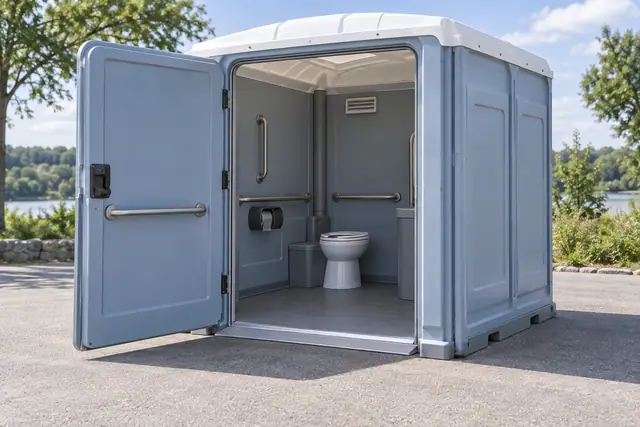
How an accessible unit differs from a standard unit
A standard portable toilet is commonly used for temporary work, gatherings and other short-term restroom needs. An accessible portable restroom is intended for situations where entry and interior-use considerations call for a different configuration, including a wider entry approach and more interior room than a standard category.
The applicable model and its features should be confirmed for the proposed rental. If the layout has accessibility obligations or venue rules, review the planned arrangement with the relevant property, event or compliance contact rather than assuming a unit category alone resolves every requirement.
- Public-facing events and gatherings where an accessible restroom route matters.
- Worksites that expect visitors, clients or workers with access needs.
- Temporary facilities where the route, entrance and usable space need deliberate planning.
Plan the route as carefully as the unit location
Identify a level, stable placement area and trace the approach from parking, entrances, activity areas or work zones to the restroom. Consider slopes, soft ground, curbs, hoses, cords, crowd barriers, parked vehicles and other obstacles that could make the approach difficult.
Leave the planned approach and entrance clear throughout the rental. For an event, show the location on the site plan alongside food areas, tents, queues and emergency paths. For a jobsite, avoid routing users through changing work areas or across vehicle movements when a safer accessible route can be maintained.
- Proposed surface condition and whether it remains stable in expected weather.
- Clear route from the main user area to the restroom entrance.
- Space around the unit and entrance for safe approach and use.
- Visible wayfinding where the restroom may not be obvious.
- A plan to keep barriers, stored materials and temporary cables out of the route.
Coordinate the rental details
When requesting an accessible portable restroom, share the location, dates, expected users, proposed placement, route conditions and any venue constraints. Include gates, vehicle approach, restricted hours and the on-site person who can help coordinate delivery, servicing and collection.
A quote discussion can identify the requested category, rental duration, placement and access conditions, delivery and pickup coordination, supplies and expected service needs. Availability and the model that applies to the request are confirmed before you build the final layout around it.
Questions before you book
When is an accessible portable restroom a useful choice?
It is worth discussing when users may need a more accommodating entry and interior-use arrangement than a standard unit, particularly at public-facing events, visitor-accessible worksites and gatherings where route planning matters.
What site route and surface details matter?
Describe the ground condition, slope, approach from the main activity area, curbs or obstacles, entrance clearance, barriers and anything that could change during the rental.
Does an accessible unit make the whole site accessible?
No. The approach route, placement area, entrances and surrounding event or worksite layout also need attention. Confirm applicable requirements with the property or event authority.
What should be confirmed for the selected unit?
Confirm the applicable model, availability, placement footprint, access route, rental period, servicing needs and delivery and pickup arrangements through the contact process.